
When examining the punk scene, it’s crucial to highlight the two regions where it was most influential and enduring: the United Kingdom and the United States, particularly New York City. In the UK, punk emerged in the late 1970s as a fierce response to political unrest and economic hardship, with bands like the Sex Pistols and The Clash using their music to challenge authority and express working-class frustration. In contrast, punk in New York City developed earlier in the 1970s as part of a raw, artistic underground scene centered around venues like CBGB, where acts such as the Ramones, pushed creative boundaries and embraced a DIY ethos. This paragraph will explore how punk in these two locations took shape under different circumstances—politically fueled in the UK and artistically driven in NYC—yet both left a profound impact on music, culture, and youth identity. In both locations punk, at its core, impacted a chain reaction that fought against corporate control over culture, with Stacy Thompson emphasizing the contrasts between mainstream punk which involve stores like Hot Topic and music from bands like Blink 180 to anarcho-DIY punks who lived communally and produced their own art without influence or involvement of large corporations.
————————————————————-
DIY-Ethos Impact: Punk’s do-it-yourself (DIY) ethos centers on the belief that artistic creation should be accessible to anyone, regardless of resources, training, or corporate backing. While this ethos began in music, it had a powerful influence on punk cinema, which adopted a similar attitude of self-reliance and raw authenticity. Rather than prioritizing polished visuals or expensive equipment, punk films embraced imperfection and individuality as part of their aesthetic. As Stacy Thompson emphasizes, the involvement of a major corporation like Sony disqualifies a work from being truly punk, no matter how rebellious it may appear on the surface. The core value of punk is authenticity—not just in style, but in production and distribution.
Therefore, punk’s influence helped redefine cultural production by challenging traditional norms about:
- Who gets to create culture (not just the elite or trained professionals)
- How culture is distributed (not solely through corporations or major studios)
- What counts as “good” or “authentic” art (not just glossy, high-budget productions)
The UK: Punk isn’t dead—at least not in spirit. While it may no longer dominate the mainstream, it remains a vital part of cultural history and continues to influence music, fashion, and politics today. In the 1970s, British punk emerged as a fierce reaction to the country’s bleak political and social climate. Economic struggle and widespread youth disillusionment, marked by both frustration and a loss of faith in the system—created the perfect storm for punk’s rise. It all began at SEX, a rebellious boutique on London’s King’s Road, and soon spread to suburbs and towns across the UK, igniting grassroots participation. Punk gave voice to the working class through its anti-establishment stance, and movements like Anarcho-punk and Oi! embodied this resistance. Today, punk’s legacy lives on in British subcultures, where its DIY aesthetic and political edge still inspire acts of creativity and defiance.
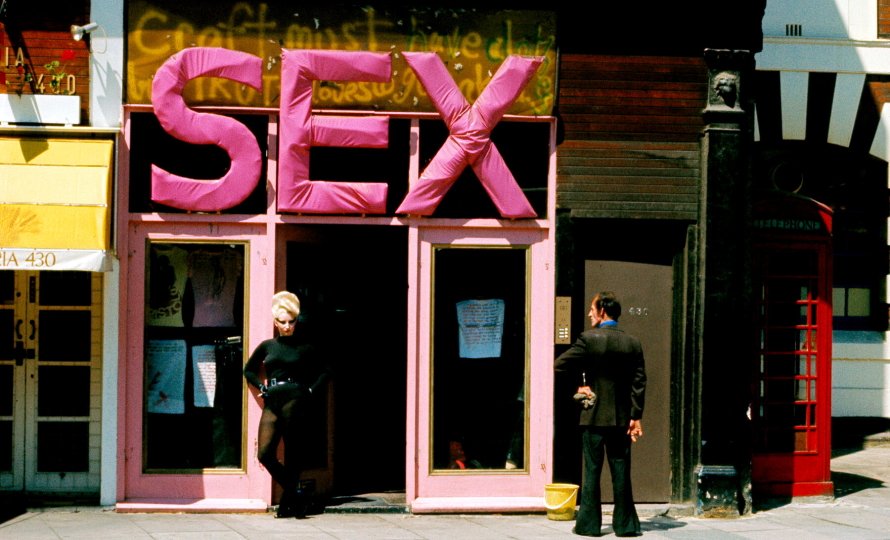
Picture of SEX: Vivienne Westwood’s Iconic Boutique
The United States: The early US punk scene, centered in New York from 1974 to 1977, was small, isolated, and lacked a cohesive identity or movement. Bands like Television, Patti Smith, The Ramones, Blondie, Talking Heads, and others played iconic venues such as CBGB and Max’s Kansas City, but they didn’t create a unified subculture or spark a widespread youth revolution. The scene was more artistic and intellectual than political, drawing a niche crowd, many of whom were more interested in socializing than forming new bands. There was no distinct style, philosophy, or media presence beyond Punk magazine, which didn’t even focus solely on punk music. Despite their talent, most of these bands failed commercially and followed the record industry’s rules, limiting their broader impact. Though their influence is clear in retrospect, they were largely ignored by the American public at the time. Ironically, it was the UK that later acknowledged their importance, breathing new life into their legacy.
“Question authority.” – Benjamin Franklin
It might seem unusual to include an old quote here, but it captures the essence of punk’s impact. At its core, punk sparked a cultural revolution—one that pushed people to challenge mainstream media, reject unjust laws, and prioritize personal freedom over conformity. What began as defiance soon transformed into political action. Punk communities rallied around causes like anti-racism, feminism (especially through the riot grrrl movement), anarchism, and environmental justice. These movements thrived through grassroots efforts such as zines, protests, and benefit concerts.
How Punk Impacted Broader Themes of Collective Resistance
Dead Kennedy’s: Economical
“Kill The Poor”
This album imagines a satirical scenario where a nuclear bomb eliminates only poor people, leaving everything else untouched. It serves as a sharp critique of class systems that perpetuate poverty and highlights how out of touch the upper class can be. This further reveals their delusional belief that the poor are the problem, rather than a result of systemic inequality.
Riot Grrrl: Social (Feminism)
The Riot Grrrl movement emerged from a group of young women in the Pacific Northwest who were fed up with the pervasive sexism they encountered in the punk scene. Frustrated by being sidelined and silenced, they envisioned a “girl riot” — a rebellious uprising to reclaim space in a society that consistently marginalized them. The term “Riot Grrrl,” with its triple R’s, evoked the raw, growling energy of a wild animal, symbolizing unapologetic female rage and empowerment. It was bold, messy, and fiercely unfiltered.
At the same time, on the other side of the country in Washington, D.C., women were forming support groups to confront gender-based oppression and discrimination. Without access to social media, they turned to fanzines—homemade, photocopied publications—as tools for connection and resistance. These zines became outlets for women to speak openly about deeply personal and often taboo subjects like abuse, eating disorders, racism, and homophobia. Riot Grrrls used these pages to document their lived experiences and amplify each other’s voices.
Anti-Flag: Fighting against Neoliberalism (Early 2000s)
Instead of using their typical language to denounce inequality, the band chose to repurpose the rhetoric of the powerful — those who view the poor and marginalized as a burden or threat. In an era defined by extreme wealth disparity, the song shines a light on how neoliberalism and globalization have bred division, fear of immigrants and refugees, and empowered false populist leaders like Donald Trump, Boris Johnson, and Germany’s AFD — figures who pose as anti-establishment while serving elite interests.

This entry is licensed under a Creative Commons Attribution-NonCommercial-ShareAlike 4.0 International license.

