
Punk was born out of the ashes of the 1970’s music scene, and through the fire that was raging over lower Manhattan.
Much of the scene evolved after the collapse of the Mercer Arts Center; the end of that venue led to the creation of punk as a genre. After this crumble, there was a dramatic decline in the music scene in NYC, with no music spaces left dedicated to the performance of original or new music. This almost forced the rallying around the CBGB club that occurred; there were no other music venues accepting indie bands. During an interveiw with the guitarist of the band Televisions, Richard Lloyd, he says that their lead singer discovered the CBGB and convinced Hilly Kristal (the owner of the club) to let them and other punk bands play. Kristal eventually didn’t care the type of music that was played, as long as it was good and brought in crowds.
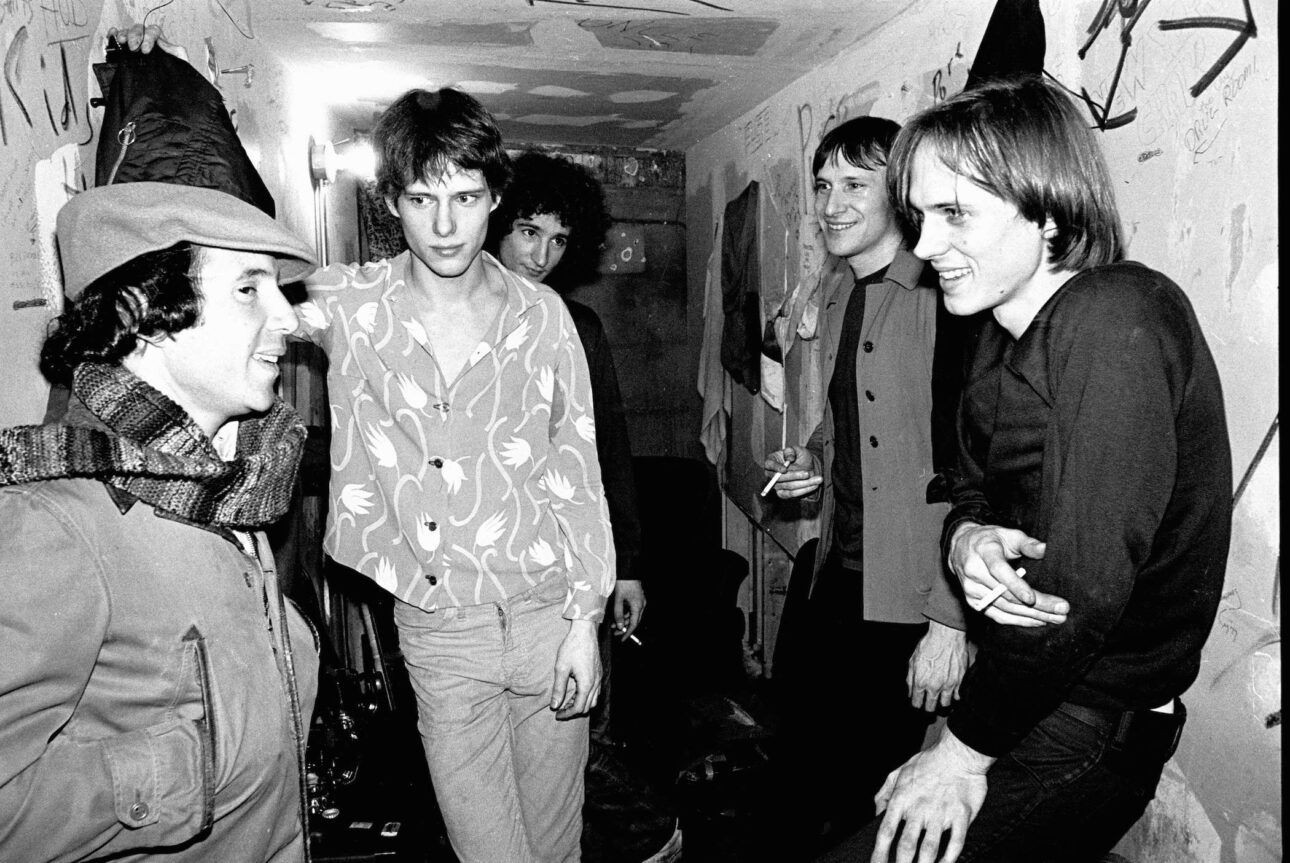 A picture of Televisions backstage with Paul Simon
And brought in crows the new emerging punk bands did; the club became a platform for new and emerging artists and created a welcome space for creativity. Many new bands and musicians were able to build themselves up because of the rundown nature of NYC at the time and the artistic space that was the CBGB club meant that artists could find other artists and build on their music. On top of this, several punk magazines were formed by journalists that frequented the club, which caused the first wave of commercialisation of the music.
Artists were barely able to do this, in fact, according to Joey Pinter, a major artist and player at the CBGB club, everyone in the scene was just barely surviving – many of them didn’t have normal jobs, they were just living and breathing music. This state of living is corroborated by many other artists, who said the generally unlivable state of NYC at the time meant rent was cheap and therefore living in the city was more available for aspiring artists. He says that describing the music movement as a ‘scene’ wouldn’t be accurate for him; it was his whole life “it’s where I lived… I didn’t know anything else”. This meant they almost had to put their all into the music and art they were creating, which was why the scene and many bands developed so quickly, and how the variety and depth of music was created. Pinter also described himself and other artists like him as being at the bottom of the heap in the music industry, saying that this very much influenced their music, as they weren’t pandering to huge audiences like those doing stadium tours, they just had their own small cult followings.
 Image of Joey Pinter playing at the CBGB club

This entry is licensed under a Creative Commons Attribution-NonCommercial-ShareAlike 4.0 International license.

